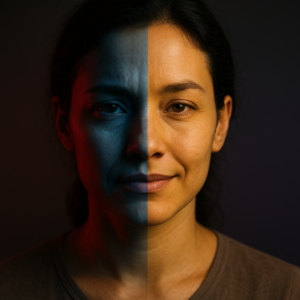


There’s a moment in every great portrait where the light stops being just light. It becomes something heavier — a mood, a secret, a truth about the person in the frame. Shadow plays its part too, carving out cheekbones, deepening the hollow of an eye, lending a sense of mystery that a fully lit face simply cannot carry. Together, light and shadow are the silent storytellers of portrait photography, and understanding how they work is the difference between taking a photo and making one.
This exploration dives into how photographers use light and shadow not just technically, but expressively — to shape emotion, reveal character, and create portraits that feel genuinely alive.
Why Light and Shadow Matter More Than You Think
Ask any seasoned photographer what separates a forgettable portrait from one that stops you mid-scroll, and the answer almost always comes back to light. But light alone isn’t enough — it’s the relationship between light and shadow that creates dimension, depth, and drama.
In purely technical terms, light defines form. Without shadow, a face becomes flat, almost cartoonish. The shadows cast by a strong side light reveal the three-dimensionality of the human face — the curve of the nose, the depth of the eye socket, the subtle architecture of the jaw. This interplay is why portrait photographers often spend more time positioning their light source than any other part of the setup.
Beyond the technical, there’s the emotional weight of shadow. Psychologically, humans are conditioned to associate light with safety and openness, and shadow with depth, introspection, or concealment. This isn’t just poetic — it directly influences how a viewer feels when they look at a portrait. A face bathed in soft, even light reads as approachable and warm. A face half-consumed by shadow feels more complex, more guarded, more layered.
The Language of Light: Different Qualities and What They Say
Not all light behaves the same way, and understanding its qualities is essential to using it intentionally in portraiture.
Hard Light vs. Soft Light
Hard light comes from a small, concentrated source — think direct sunlight, a bare flash, or a focused spotlight. It creates sharp-edged, defined shadows. In portraiture, hard light is bold and unforgiving; it accentuates texture, reveals every pore and wrinkle, and produces a high-contrast look that feels edgy and raw. It’s often used in fashion, editorial, and character-driven work where imperfection is part of the story.
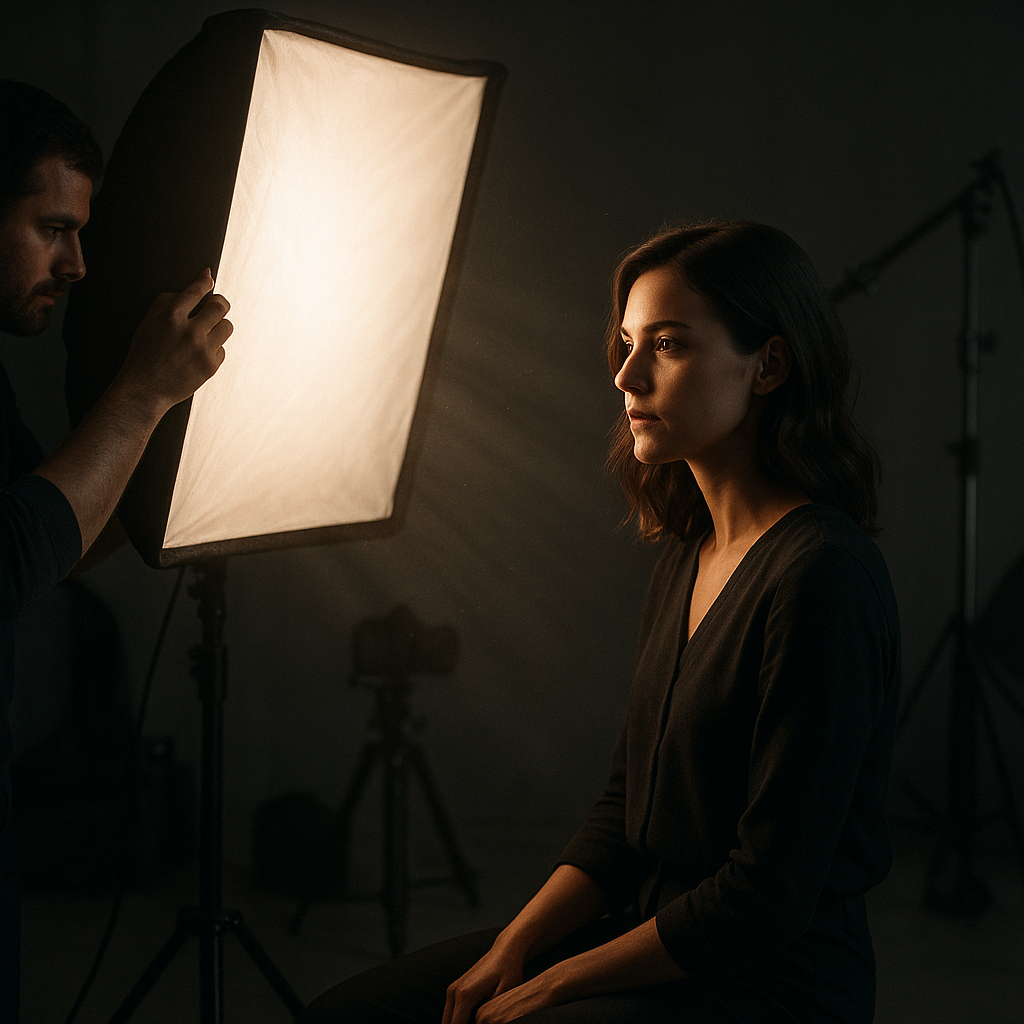
Soft light, by contrast, comes from large or diffused sources — an overcast sky, a softbox, a window with sheer curtains. The shadows it creates are gradual, with gently transitioning edges. Soft light is flattering, even, and approachable. It’s the workhorse of beauty and lifestyle portraiture precisely because it minimizes harsh contrasts and wraps the subject in gentle gradients.
Neither is inherently better. The choice depends entirely on what the portrait is trying to say.
The Direction of Light Changes Everything
Where light comes from — its angle relative to the subject — has an enormous impact on the mood and form of a portrait.
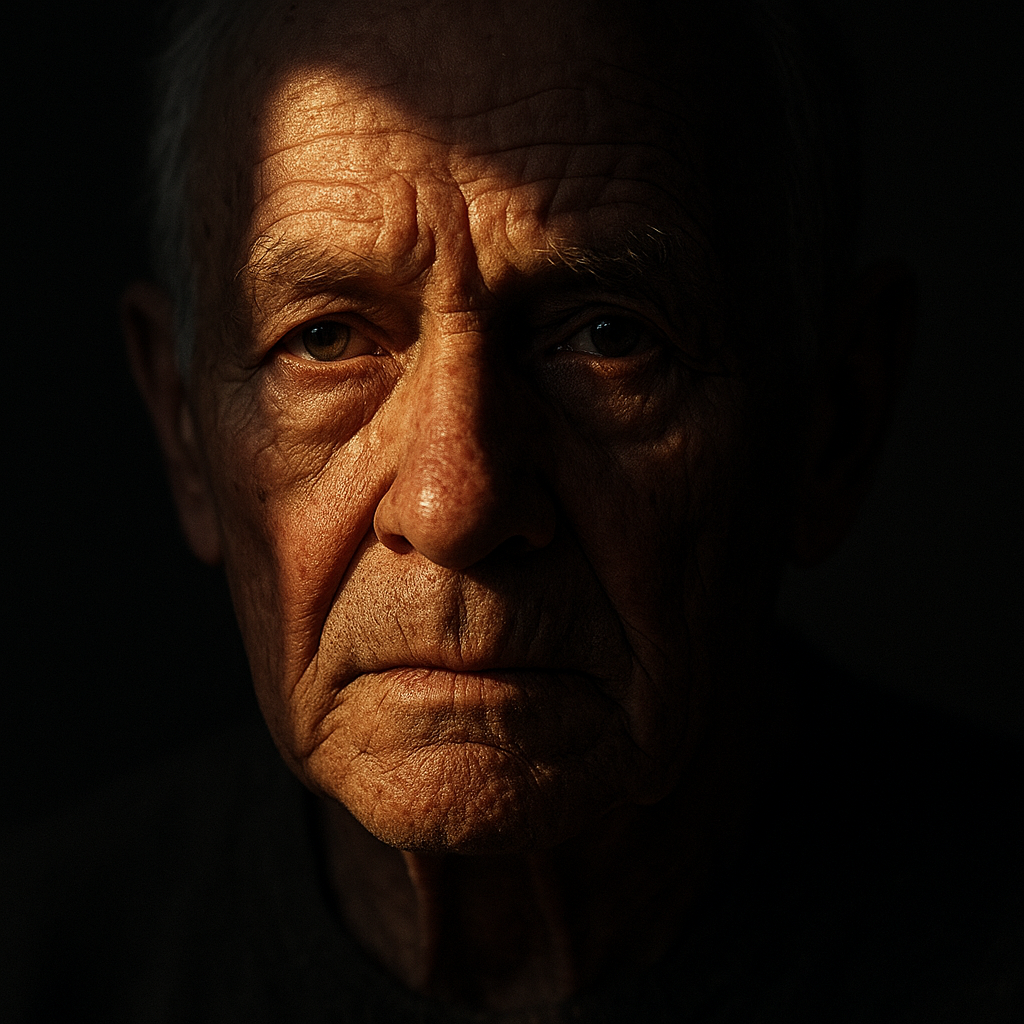
- Front lighting: Positioned near the camera axis, front light minimizes shadows on the face. It creates an even, open look — sometimes too flat for dramatic purposes, but excellent for high-key portraiture or when the goal is clarity and radiance.
- Side lighting (split lighting): Placed 90 degrees to the side, this light divides the face into equal halves of light and shadow. It’s one of the most dramatic setups in portraiture — powerful, bold, and emotionally intense.
- Rembrandt lighting: Named after the Dutch master painter, this positions the light at about 45 degrees above and to the side, creating a small triangle of light on the shadowed cheek. It’s warm, dimensional, and painterly — one of the most celebrated lighting patterns in portraiture.
- Butterfly lighting: Positioned high and directly in front of the subject, this creates a small shadow beneath the nose resembling a butterfly. It’s classic, glamorous, and particularly flattering for strong bone structure.
- Backlighting and rim lighting: When the light source is behind the subject, it creates a glowing outline — a halo effect that separates the subject from the background and adds an almost ethereal quality.
Chiaroscuro: The Art of Extreme Contrast
If there’s one concept that has bridged fine art painting and photography throughout history, it’s chiaroscuro — the Italian term for the dramatic use of light and dark contrast. Pioneered by painters like Caravaggio, Rembrandt, and Leonardo da Vinci, chiaroscuro created a sense of volume and depth that felt revolutionary at the time.
In portrait photography, chiaroscuro-inspired lighting uses deep, inky shadows and concentrated areas of bright illumination to create an almost sculptural quality. The result feels theatrical, emotionally charged, and timeless. Much of contemporary editorial and fine art portrait photography draws directly from this tradition — deliberately choosing high-contrast setups that throw large portions of the face into darkness.
What makes chiaroscuro so compelling isn’t just the aesthetic — it’s what the darkness implies. The parts of a face left in shadow become spaces of imagination. Viewers project meaning onto them, and that psychological participation is part of what makes such portraits so magnetic.
How to Use Shadows Intentionally in Portraiture
Understanding shadow is one thing — using it with intention is another. Here are some practical ways to incorporate shadow as a compositional and emotional tool.
Embrace Rather Than Correct
A common instinct — especially for photographers new to portraiture — is to eliminate shadows. Fill lights, reflectors, and post-processing are often deployed to “fix” shadow. But shadow isn’t always a problem. Sometimes it’s the point. Before reaching for a reflector, consider whether the shadow is adding something: depth, mood, mystery, or a sense of intimacy. If so, leave it.
Use Environmental Shadows as Creative Elements
Window blinds casting striped shadows across a face. Tree leaves dappling light in organic patterns. A doorframe creating a hard-edged beam. Environmental shadows can be some of the most compelling compositional elements in portraiture, and they’re completely free. Seek them out actively during shoots rather than treating them as obstacles.
Control the Ratio Between Light and Shadow
The lighting ratio refers to the difference in brightness between the lit and shadow sides of the face. A low ratio (like 2:1) creates gentle, even illumination. A high ratio (like 8:1 or greater) creates bold, high-contrast drama. Adjusting this ratio — either through the position of a fill light or a reflector’s distance — gives enormous creative control over the emotional weight of a portrait.
What Light and Shadow Symbolize in Portraiture
Symbolism in visual art runs deep, and light and shadow carry centuries of meaning. Light has long been associated with truth, divinity, awareness, and life. Shadow represents the unknown, the subconscious, secrets, and inner complexity. In portraiture, a photographer can leverage these associations consciously.
A portrait of a subject lit brightly and openly suggests transparency, confidence, and approachability. A portrait with a subject half in shadow suggests duality — that there is more to this person than what’s visible on the surface. Neither is a negative statement. In fact, the most compelling portraits often suggest that their subjects are complex, layered human beings — and shadow is one of the most eloquent ways to communicate that.
Some of the most iconic photographs in history use this symbolism deliberately. Think of the way war photographers use harsh, directional light to emphasize exhaustion and resilience. Or how beauty photographers use luminous, front-filling light to create a sense of perfection and aspiration. The light choices are never accidental.
The Importance of Lighting in Portraits: A Practical Summary
Lighting in portrait photography matters for several interconnected reasons:
- It shapes form: Without directional light and shadow, a face appears flat. Light and shadow sculpt three-dimensionality into a two-dimensional image.
- It communicates mood: The quality, direction, and contrast of light directly influence the emotional tone of a portrait — from joyful and radiant to brooding and complex.
- It guides the viewer’s eye: Bright areas naturally attract attention. A photographer who controls the light controls where viewers look first, second, and third within the frame.
- It defines the subject’s relationship with the viewer: Open, revealing light invites the viewer in. Dramatic, shadow-heavy light creates a sense of distance or mystique.
- It distinguishes the subject from the background: Strategic use of light and shadow creates visual separation and hierarchy between subject and environment.
Natural Light vs. Artificial Light: Different Tools, Same Principles
One of the most debated topics in portrait photography is whether natural light or artificial light produces better results. The honest answer is that the principles of shadow and light apply equally to both — and the best photographers learn to work fluently with each.
Natural light — especially during the golden hour, when the sun sits low on the horizon — produces soft, warm, directional light that is almost impossibly flattering. The shadows it casts are long and gentle. It has a quality that’s difficult to replicate artificially and an organic variability that keeps each moment feeling unique.
Artificial light — studio strobes, speedlights, continuous LED panels — offers complete control. A photographer can recreate any natural light situation, push contrast beyond what natural conditions allow, and maintain consistency across an entire session regardless of the time of day or weather. For anyone serious about portrait photography, understanding how to shape artificial light with modifiers like softboxes, beauty dishes, and grids is fundamental.
What remains constant across both is this: the best portraits use light and shadow with intention. Whether the light source is the sun or a strobe, the question is always the same — what is this light saying, and what is this shadow hiding?
Conclusion
Light and shadow are not simply technical considerations in portrait photography — they are the primary language through which a portrait speaks. The quality of the light sets the emotional temperature. The direction shapes the face into something dimensional and alive. The shadow adds depth, mystery, and the suggestion of a fuller, more complex inner world.
Understanding how hard and soft light differ, how direction and ratio shape mood, how chiaroscuro traditions inform modern portraiture, and how to read environmental shadows as creative opportunities — these are the tools that elevate portrait photography from documentation to art. The face in the frame may belong to the subject, but the light that reveals it — and the shadow that conceals it — belongs entirely to the photographer.
Great portraits don’t just capture what someone looks like. They reveal something true about who they are. And that truth, more often than not, lives somewhere in the space between the light and the dark.